


When your truck is making a noise, losing power, throwing a check engine light or doing something it definitely was not doing last week, the natural question is simple: What’s wrong with it?
The answer is not always simple.
Modern diesel trucks are complicated systems. Fuel, air, boost, electronics, emissions controls, cooling, transmission behavior and dozens of sensors are all working together. A symptom in one area can be caused by a problem somewhere else entirely, which is why a proper diagnostic is more than plugging in a scanner and reading whatever code pops up.
At Bodacious Diesel, the goal is to understand what the truck is actually doing, what caused it, and what else needs attention before we start recommending repairs.
We Start With Why You Brought the Truck In
The first part of any diagnosis is the customer complaint.
Maybe the truck is going into limp mode. Maybe it is hard starting when cold. Maybe the transmission slips when you are towing. Maybe it is overheating on a grade, smoking under load, losing boost or making a noise that only seems to happen at 65 miles an hour.
Those details matter.
A good diagnostic starts by understanding the conditions surrounding the problem, not simply reading a fault code. We want to know when it happens, how often it happens, whether anything changed before it started, and what the truck was doing when the symptom appeared.
The more specific you can be, the better. “It runs weird” gives us a lot more ground to cover than “it loses power after 20 minutes of towing uphill.”
That does not mean you need to know what is wrong before you bring it in. That is our job. We just want to know what you are experiencing.
Then We Verify the Complaint
Once we have the truck, the next step is confirming what it is actually doing.
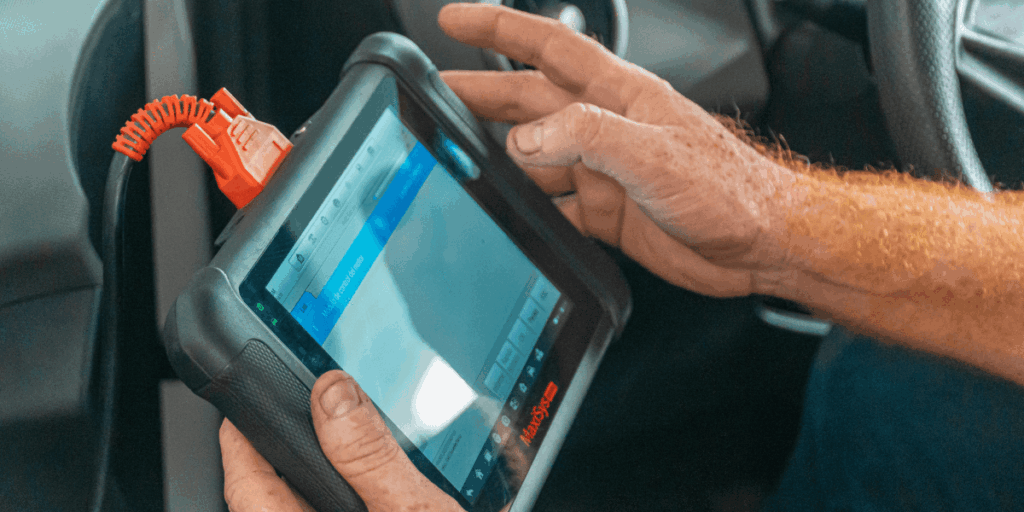
That can involve scanning the vehicle, looking at live data, checking mechanical systems, inspecting wiring and connections, road testing when appropriate, or putting the truck under the conditions that cause the problem.
The code is part of that process, but it is not the entire process.
If a truck has an underboost code, for example, that does not automatically mean it needs a turbo. If it has a fuel-pressure fault, that does not automatically mean the injection pump failed. A transmission-related warning does not mean we order a transmission before testing anything.
We want to know why the computer set the fault and whether the data supports the repair.
That extra step matters because replacing the wrong part does two things: it costs you money and leaves the original problem sitting there waiting to come back.
We Look at More Than the One Thing You Mentioned
One of the things that has always separated our process is that we do not put blinders on.
If you bring the truck in with three concerns, we are going to address those concerns. But while it is here, we also look over the rest of the truck for anything else that deserves attention.
That does not mean every truck leaves with a giant wish list.
It means we would rather tell you what we see than fix one problem and send you out the door with another one developing right next to it.
A truck works as a complete unit. Steering, brakes, cooling, suspension, drivetrain, fuel delivery and electrical systems all affect how safely and reliably it operates. If we see something important while diagnosing the original complaint, you should know about it.
From there, we can break things down into what needs attention now, what can wait, and whether there are repairs that make sense to do together because they share labor.
That information lets you make a better decision about the truck instead of being surprised by the next problem a week later.
Diagnosis Takes Time for a Reason
Most diagnostic and repair work at Bodacious is handled as a drop-off rather than a traditional appointment.
Oil changes, fuel filters and other predictable services are easier to schedule because we know roughly how much time they require. Diagnostic work is different.
A truck may arrive hot and need time to cool before certain components can even be safely touched. A problem may only happen under load or once the vehicle reaches operating temperature. We may need to verify a fault, run tests, review data, or rule out several possible causes before we can confidently tell you what is wrong.
Depending on shop workload and what the truck is doing, we typically work toward a full diagnosis and estimate within about 24 to 72 hours.
That does not mean every repair will be finished in that window. Parts availability, the size of the job and what we find can all affect the timeline. But our goal is to give you a clear picture of what the truck needs before the repair moves forward.
We would rather take the time to diagnose it correctly than make a fast guess because somebody wants an answer in 30 minutes.
Sometimes the Hardest Part Is Reproducing the Problem
Intermittent problems are some of the most frustrating jobs for both the customer and the technician.
If a truck acts up every morning at 20 degrees but behaves perfectly by the time it gets to the shop, we have to account for that. The same is true for a truck that only loses power while towing, overheats on a long climb or throws a transmission warning after an hour on the highway.
That is why the details you give us are useful.
Photos of dash warnings can help. A note about speed, temperature, load or road conditions can help. Even telling us what you have already replaced can save time.
And if the truck has already been somewhere else, tell us that too.
We see plenty of vehicles after another shop or dealer has already worked on them. There is nothing unusual about that. Sometimes the difficult ones are exactly the jobs we like getting.
What matters is knowing what has already been tried so we are not starting from a false assumption.
What Happens After We Find the Problem?
Once we have enough information to identify the problem, we explain what we found and what we recommend doing about it.
That conversation matters just as much as the diagnosis itself.
There is a difference between something that needs to be repaired immediately and something that should be monitored or planned for. There may also be situations where doing two repairs together saves labor because we already have part of the truck apart.
We want you to understand those differences.
The goal is not to hand you a list with a big number at the bottom and expect you to say yes. The goal is to tell you what is wrong, why it matters, what can wait and what makes sense while the truck is already in the shop.
Some customers want everything taken care of at once. Others need to prioritize.
Either way, you should have enough information to make that decision.
Why We Don’t Like the Parts Cannon
If you have owned a diesel long enough, you have probably heard some version of this:
“Try this sensor.”
“That year is known for turbos.”
“It’s probably the injectors.”
“My buddy’s truck did the same thing and it needed a pump.”
Any one of those guesses might turn out to be right. That does not make guessing a diagnostic procedure.
Experience absolutely matters. Knowing common failures on a 6.0 or 6.7 Power Stroke, an LML Duramax or a 6.7 Cummins gives us a better starting point. But experience should help guide the testing, not replace it.
There is a big difference between saying, “We see this failure often, so this is one of the first things we are going to check,” and saying, “They all do that. Order the part.”
We prefer the first one.
The Goal Is to Give You the Whole Picture
A good diagnostic should leave you knowing more about your truck than when you dropped it off.
You should know what caused the problem, what needs to be repaired, what else we found, and what your priorities are going forward.
That is especially important with diesel trucks because a small problem left alone can turn into a very expensive one, while a scary warning on the dash can sometimes have a much simpler cause than expected.
At Bodacious Diesel, we work on Ford Power Stroke, Chevy/GMC Duramax and Dodge/Ram Cummins trucks from Golden, the Colorado Front Range and the surrounding foothill communities. A lot of what comes through our doors involves check engine lights, drivability problems, fuel systems, turbos, transmissions and the problems that were not obvious the first time somebody looked at them.
If your truck is doing something it should not be doing, you do not need to diagnose it before you call us.
Just tell us what it is doing.
We will take it from there.
Frequently Asked Questions
How long does a diesel diagnostic usually take?
It depends on the problem and current shop workload. At Bodacious Diesel, we typically work toward a full diagnosis and estimate within approximately 24 to 72 hours. Intermittent problems, vehicles that need to cool down, or issues that require additional testing may take longer.
Do I need an appointment for diesel diagnostics?
Most diagnostic and repair work is handled as a drop-off rather than a scheduled appointment. Routine services with predictable time requirements, such as oil changes and fuel filters, can be scheduled.
Does a check engine code tell you exactly what part needs to be replaced?
Not necessarily. A trouble code identifies a condition the vehicle computer detected and helps guide the diagnostic process. Additional testing is often necessary to determine what actually caused the fault.
Will you inspect the rest of the truck during a diagnosis?
Yes. We address the concerns that brought the truck in and also look over the rest of the vehicle for other issues that may need attention. We then explain what is urgent, what can wait and where repairs may make sense to combine.
What information should I give the shop when I drop off my truck?
Tell us what the truck is doing, when the problem occurs, whether it happens hot or cold, whether it changes under load or while towing, and any repairs that have already been attempted. Photos of warning messages or notes about the conditions surrounding the problem can also be useful.