



Truck AC Repair for Cabs That Won't Cool or Heat
Truck AC repair at Bodacious Diesel means finding why the cab won't cool or heat before anything gets recharged or replaced: a leak, a compressor, a blend door, a control fault or a cooling problem upstream. Diesel or gas, it gets the same scan tools and gauges as our engine work.

Three systems share one set of vents
A complaint in one can start in another, so we check all three.
The A/C loop
The compressor pumps refrigerant, the condenser sheds heat and the evaporator chills cab air. Lose refrigerant or airflow and the vents warm up.
The heat side
Cab heat is engine coolant through the heater core. No heat means the coolant is not hot, not reaching the core, the core is plugged, the blend doors are broken or the controls are bad.
The controls in between
The control head, blower and door actuators set how hot the air is and where it goes. A stuck blend door makes a healthy A/C blow warm.
What you feel in the cab, and where we look first
What we check before quoting a part.
Warm air with the A/C on
If the compressor clutch never engages, a low charge may have tripped the pressure switch, or the clutch, relay or wiring has failed. On newer clutchless compressors, we check the control valve command instead. If it engages and the air stays warm, suspect a worn compressor or a blend door parked on heat.
What we check
- Compressor command versus engagement
- High and low side pressures
- Blend door position on the scan tool
Cooling that comes and goes
A worn clutch air gap can drop out once hot. Moisture or a bad evaporator sensor can let the evaporator ice over, so air goes cold, then weak and warm. Quitting in traffic only points to condenser airflow.
What we check
- Pressures over a full warm-up
- Clutch air gap and engagement when hot
- Condenser airflow, cooling fan and fan clutch
Cold air on a cold morning
Low coolant, a stuck-open thermostat, an air pocket or a scaled-up core all starve the cab of heat. Engine temperature is part of the same job, covered on our truck overheating repair page.
What we check
- Coolant level and engine temperature on the scan tool
- Heater hose temperatures in and out
- Blend door travel to full hot
Air goes to the wrong place
Defrost when you asked for the dash, or one side colder than the other, is usually a door actuator. On older vacuum-operated systems, a cracked line does the same.
What we check
- Commanded versus actual door position
- Actuator operation and calibration
Cold air, barely moving
Only working on high points to the resistor or blower module. Weak on every speed: a tired motor, packed cabin filter or iced evaporator.
What we check
- Blower current draw and speed control
- Cabin filter and the evaporator face
What the fix looks like once we know the cause
The same parts work the same way on Powerstroke, Duramax and Cummins trucks and on American gas pickups and SUVs. Access is what changes.
| Repair | When it is the right call | What goes with it |
|---|---|---|
| Leak repair and recharge | A hose, O-ring, valve or fitting leaks, or a bigger part like the compressor, evaporator, condenser or dryer. | A vacuum test of the system's integrity, which also pulls water out, then a charge by weight. |
| Compressor or clutch | The clutch will not engage, or the compressor is noisy or weak. | After an internal failure, a new drier or accumulator and expansion device, and flushed lines, so debris does not kill the new one. |
| Condenser | Rock damage, a leak at the front, or fins packed too tight to pass air. | Cleaning the stack behind it and a fan clutch check. |
| Evaporator or heater core | Heater core: a sweet smell, greasy fog on the glass, damp carpet or a plugged core. Evaporator: a leak traced to the dash box. | Usually dash work, where most of the labor goes. |
| Blend door, mode door and controls | Wrong temperature, wrong vents, a clicking dash or a dead blower speed. | Actuator, blower motor, resistor or control head, with a calibration where the system calls for one. |
Explained first, then fixed
319 reviews
- Customer
- Scott Campbell
I can’t say enough good things about Bodacious Diesel. They’re team is knowledgeable, honest, and incredibly thorough. They took the time to explain exactly what was going on with my truck, gave clear options, and never tried to upsell unnecessary work. The repairs were done right and at a fair price. You can tell they genuinely care about their customers and take pride in their work. If you’re looking for reliable diesel mechanics you can trust, Bodacious Diesel is the place to go.5 STARS
From vent temperature to a verified recharge
Refrigerant goes in last, after the reason it left is fixed.
Confirm the complaint
Vent temperature, pressures and compressor engagement, engine warm.
Find the leak
Dye, an electronic detector and a vacuum hold show where the refrigerant went.
Recover, repair, recharge
Repair, pull a deep vacuum, charge by weight and recheck vent temperature.
Why Colorado summers and winters test the system
- Summer towing with the A/C on stacks condenser heat in front of a radiator already working hard on the climb
- Many trucks drop the compressor when refrigerant pressure runs high
- A diesel makes little spare heat at idle. A thermostat stuck open will usually set a check engine light, or the gauge will not rise to normal operating temperature
- On many trucks defrost runs the compressor to dry the air, so an A/C fault can mean glass that will not clear on a cold, humid morning
What changes the price of A/C and heat work
A loose connector and a leaking heater core can both leave you with no heat, and one costs far more than the other. We quote once testing shows which it is.
| Cost factor | Why it changes the job |
|---|---|
| Where the leak is | A fitting under the hood is quick. An evaporator in the dash is not. |
| How the compressor failed | A clutch is one part. Internal failure brings flushing and extra parts. |
| Dash teardown | Heater cores, evaporators and some actuators sit deep behind the dash. |
| Refrigerant and charge size | Older trucks use R-134a and many newer trucks use R-1234yf, which costs more per ounce; the under-hood label sets the type and amount. |
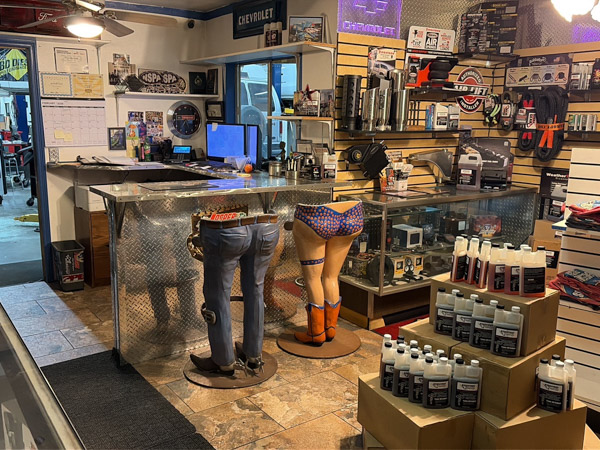
Most climate control work is drop-off, with diagnosis typically taking 24 to 72 hours depending on workload. We call with what needs attention now and what can wait, and nothing is repaired until you approve it. The full process is on our what to expect page.
Tell us what your truck is doing
Send the year, the engine and what you are seeing, and we'll get back to you as quickly as we can.
- Year, make and engine
- What it is doing, and when it started
- Any codes or recent repairs
Rather talk it through? Call (303) 808-1563
A/C and heater questions from truck owners
What owners ask before they bring the truck in.
The refrigerant left for a reason, and overcharging is hard on a compressor. Sealer cans can gum up the system. We find the leak, fix it and charge by weight.
Climbing with a trailer at low speed puts the most heat in front of the grille with the least air moving through it. If the condenser is packed or the fan clutch slips, refrigerant pressure climbs and the compressor can start cycling off. That is why truck AC repair on a tow rig starts with airflow and fan engagement, not A/C parts.
Some wait is normal on a cold diesel. If it never gets truly warm, or the gauge stays low on the highway, suspect the thermostat, coolant level, an air pocket or a plugged heater core.
Yes. Truck AC repair and heater work on American gas pickups and larger SUVs from Ford, Chevrolet, GMC and Ram gets the same gauges, leak testing and scan tool checks as the diesels.
Sometimes a door actuator with stripped gears hunting for a position it cannot reach. We confirm which one on the scan tool before opening the dash.
Sweating in the cab or scraping frost inside it? Let us track down why
Call and tell us what the vents are doing, or use Request Service to send the details. Or drop us a line right here from the website and we'll get back to you as quickly as we can.