


Diesel Fuel System Repair for Powerstroke, Duramax and Cummins
Diesel fuel system repair starts with one question: where is the pressure going wrong, and why? We test the supply side, the pump and the injectors before ordering parts, because a new pump on a contaminated system becomes the next failed pump.
Two halves, and either one can stop the truck
Most modern diesel fuel systems have a low-pressure side and a high-pressure side. Plenty of trucks that come in with a "bad pump" actually have a supply problem that starved the pump first.
The low-pressure side
Fuel leaves the tank through a lift pump (or the high-pressure pump pulls it, depending on the platform), then passes through the filters and the water separator. A weak lift pump, a clogged filter, a line pulling air or water in the separator all look the same: the high-pressure side cannot make the pressure it is asked for. This side is the lower cost of the two to test and fix, so we test it first.
The high-pressure side
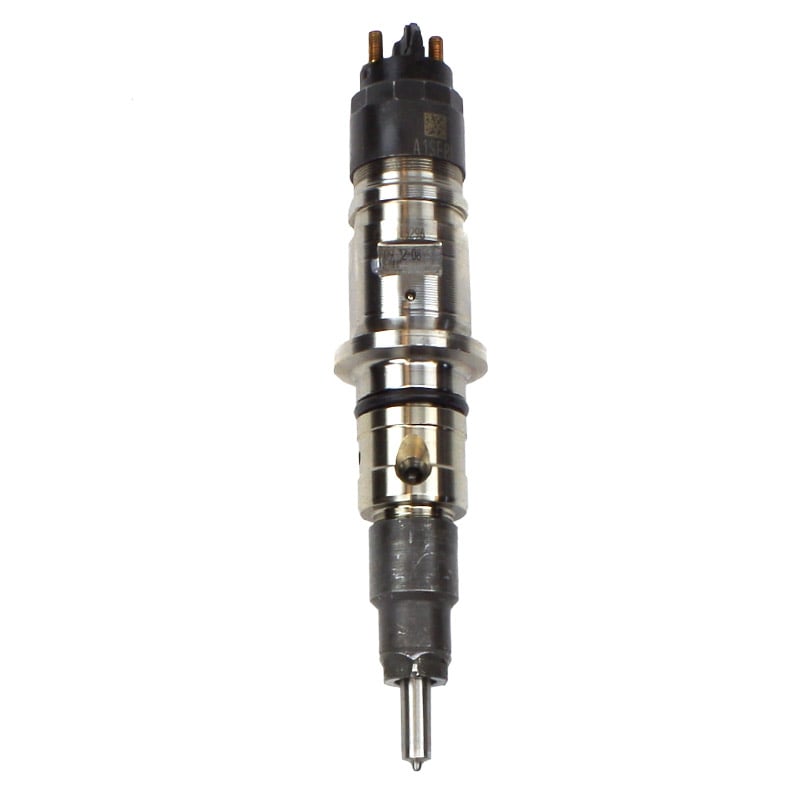
On common-rail trucks the high-pressure pump feeds a rail at more than 20,000 psi, and the engine computer fires each injector from that rail. Pump wear, a leaking pressure regulator or relief valve, or injectors returning too much fuel all pull rail pressure down. Many of these trucks left the factory with Bosch pumps and injectors, and we work with Bosch diesel fuel-system components. More detail lives on our diesel injection pump repair and diesel injector repair pages.
Two things around here change a fuel job. Cold starts expose a weak lift pump, a tired injector or fuel that has started to gel, so a truck that starts fine in July cranks and cranks in January. Then there is load. A long mountain pull with a trailer asks the fuel system for everything it has, and that is where a marginal pump or a half-plugged filter shows up as low power or a rail pressure code.
What the truck is telling you
Fuel faults and other faults can feel identical from the driver's seat. Here is what each symptom usually points to.
| What the truck is doing | What it often points to |
|---|---|
| Hard start or no start | Not enough rail pressure at cranking. Common causes are air in the system after a filter change, a weak lift pump, an injector leaking back to return or fuel that gelled overnight. |
| Low power under load | Fine empty, falls on its face with a trailer. Restricted filters and a worn pump do this, and so do boost leaks and turbo faults, so we test before guessing. |
| Fuel pressure codes such as P0087 | Rail pressure is lower than the computer asked for. The code says the pressure fell short, not why. The why could be anywhere from the tank to the injectors. |
| Rough idle, misfire or smoke | One injector sticking or flowing too much changes how that cylinder burns. Smoke and a lope at idle are worth a balance test before buying a full set. |
| Water-in-fuel light that keeps coming back | Water in the tank, a bad load of fuel, or DEF poured into the fuel filler by mistake. Contamination wears pumps and injectors fast. |
| Glitter in the fuel filter | On CP4 trucks, the warning nobody wants. It usually means the pump is coming apart and sending debris downstream. Stop driving it and call. |
Which fuel system is on your truck
Ford, GM and Ram took different routes, and the failures follow the hardware. Pick your truck.
Ford Powerstroke
The 7.3 and 6.0 use HEUI injectors. A lift pump supplies the fuel, but high-pressure oil from the HPOP fires the injector, so a 6.0 that cranks and will not start can be fuel supply, oil pressure or the FICM. The 6.4 moved to high-pressure common rail with piezo injectors. The 6.7 has run a Bosch CP4.2 since 2011, the same pump family as the LML Duramax, with revisions on later trucks.
Every generation is on our Powerstroke repair page.
Chevy and GMC Duramax
The LB7 through the LMM run a Bosch CP3, a pump with a solid reputation. The LB7 has its own fuel story: injectors that sit under the valve covers and a history of failing. The LML switched to the Bosch CP4.2, and when that pump lets go it can send metal through the rail, the lines and every injector. The L5P moved to a Denso high-pressure pump.
If you own an LML, read our Duramax CP4 pump replacement page before something fails. Every generation is covered under Duramax repair.
Ram Cummins
The 1994 to 1998 12-valve 5.9 runs the Bosch P7100, an inline mechanical pump that is hard to kill. The 1998.5 to 2002 24-valve uses the electronic VP44, which depends on the lift pump for supply and cooling, so a weak lift pump is a common reason VP44s die. The 2003 to 2018 common-rail trucks run a Bosch CP3. The 2019 and newer 6.7 moved to a Bosch CP4, so we confirm which pump is on a later truck before talking parts.
We carry FASS lift pump and filtration products. More on each generation at Cummins repair.
How we track down a fuel fault
Same order every time, cheapest checks first, so you are not paying for a pump the truck never needed.
Scan and listen
Your description, then codes, freeze frame data and desired versus actual rail pressure on OEM factory scan tools.
Test the supply side
Lift pump pressure and volume, filter condition, the water separator and any sign of air getting into the lines.
Test the high side
Rail pressure under load, injector balance and return rates, pump output and the pressure regulator or relief valve.
Look for contamination
A fuel sample and a cut-open filter tell us if water, debris or metal is in the system. That decides how much of it gets replaced.
Why one fuel repair costs far more than another
Fuel work runs from a filter and a bleed procedure to a full system replacement, and the price depends on what testing finds. These are the things that move it.
- Whether the failure stayed in one part or spread contamination through the rail, lines and injectors
- Which pump and injectors your platform uses, and how many cylinders get injectors
- How much has to come apart to reach the parts on your engine
- Other repairs that share the same teardown, where combining them saves labor

After testing, you hear what needs fixing now, what can wait and what it costs, and no work is done without your approval. More on how that call goes on our what to expect page.
Tell us what your truck is doing
Send the year, the engine and what you are seeing, and we'll get back to you as quickly as we can.
- Year, make and engine
- What it is doing, and when it started
- Any codes or recent repairs
Rather talk it through? Call (303) 808-1563
Stuck after a filter change, hundreds of miles from home
From Google, word for word.
319 reviews
- Customer
- Rick Brissette
I was passing through from Iowa and stopped to get some FASS filters. I had a question about a fuse and when he looked at it instantly saw that it had been installed poorly. He quickly remedied the problem and I was on my way. The next day I attempted to change the filters (which I have done before) and was not able to get the truck started. I called Bodacious and he was able to tell me what to do over the phone and I was up and running in a couple of minutes. You really saved the day. I was hundreds of miles from home! Not only that, your repositioning of wires at the onset prevented further failure. I never did get your name? Thanks a bunch!5 STARS
Fuel system questions we get on the phone
What truck owners ask before they bring a fuel problem in.
From the driver's seat you often cannot. Low power can be fuel, boost or an emissions restriction. Diesel fuel system repair here starts with measuring supply and rail pressure, so the answer is tested, not guessed.
Yes. Water, dirt and DEF in the fuel tank all damage the tight clearances inside a high-pressure pump and injectors. Before any diesel fuel system repair is quoted, we trace where it came from and how far it traveled.
That is your call. A CP4 that fails can take the rail, lines and injectors with it, which turns a pump job into a full fuel system job. Some owners replace it ahead of time and some keep driving with good filtration and an eye on the filter.
Diagnosis comes first and typically takes 24 to 72 hours depending on workload. Plan on dropping the truck off, because most fuel testing needs it in a bay. Repair time after that depends on what failed and on parts availability.
Often, yes. Cold foothill mornings expose weak lift pumps, leaking injectors and fuel that has started to gel, though glow plugs, intake heaters and batteries cause long cranks too. Bring it in while it still starts.
Losing power or fighting a hard start? Call before it gets worse
A fuel problem caught early is usually a smaller repair. Call with what the truck is doing, when it started and any codes you have pulled. Or drop us a line right here from the website and we'll get back to you as quickly as we can.