


Truck Overheating Repair for Gauges That Climb Under Load
Truck overheating repair at Bodacious Diesel starts with finding the cause: the radiator, the water pump, the fan clutch, a coolant leak, head gaskets or something else inside the engine. We test the whole system on diesel and gas trucks and fix what actually failed.

Six places a cooling system falls behind
The gauge climbs when any link in the loop falls behind.
Radiator
Plugged inside with scale or outside with bugs, it sheds less heat. Plastic tanks crack at the seams.
Water pump
A worn or broken impeller or a weeping seal causes a lack of flow. Look for crust below the weep hole.
Thermostat
Stuck closed, it overheats fast. Stuck open, the truck warms up slowly, runs cold and the heater blows lukewarm.
Fan clutch and fan
Most diesel pickups use a big fan on a viscous or electro-viscous fan clutch. A slipping clutch slows airflow across the radiator, raising coolant temperature right when a climb needs it.
Hoses, cap and leaks
A soft hose collapses, a tired cap lets coolant boil early, and small leaks drop the level.
Diesel coolers
EGR and oil coolers share the coolant loop on many diesels. When one cracks or clogs, the system pays.
What a cooling problem looks like before it gets expensive
Catching the warning is the difference between a hose and a head gasket.
- Gauge sitting higher than it used to
- Gauge climbing on hills, dropping on flat ground
- Coolant you keep adding with no puddle under the truck
- A fan roaring all the time, or never at all
- Transmission temperature rising with it

Pick the situation, see what usually causes it
When the gauge climbs tells us more than how high. Choose the one that sounds like your truck.
Hot under a heavy pull
A loaded climb makes the most heat at the lowest road speed. A fan clutch that no longer locks up, debris between the radiator and charge air cooler, or a worn impeller can keep up in town and lose on a long hill.
What we check
- Fan clutch engagement at temperature
- Airflow through the stacked coolers up front
- Coolant level, cap pressure and small or large leaks
Hot when barely moving
At idle the fan does all the work. Heat at a stoplight that clears on the highway points to the fan, its clutch, low coolant or a cracked shroud.
What we check
- Fan operation and clutch drag
- Shroud condition and fit
- Coolant level after a hot soak
The coolant is going somewhere
Coolant that vanishes with no puddle is going into the engine or exhaust. On many diesels that is a cracked EGR cooler or a head gasket, covered on our EGR cooler replacement page. On any engine it can be a head gasket.
What we check
- Pressure test with the system hot and cold
- Combustion gas in the coolant
- Oil for coolant contamination, and coolant for oil or fuel contamination
Hot at steady highway speed
Plenty of airflow and still hot means coolant is not moving: a sticking thermostat, a plugged radiator, a collapsed hose or trapped air.
What we check
- Temperature drop across the radiator
- Thermostat opening and pump flow
- Hose condition under pressure
Why Colorado finds the weak spot in a cooling system
A tired cooling system can hide for years on flat ground. Heading west with a camper or trailer is where it shows.
- Long I-70 climbs with heavy loads, where the higher altitude means less air across the cooling rack and more heat
- Coolant boils at a lower temperature at Front Range elevations, so a weak cap matters more
- Summer A/C dumps condenser heat in front of the radiator
- Cold winter mornings expose a thermostat that sticks open
Many trucks cool transmission fluid at the radiator, so the two heat each other on a climb. If it slips or flashes the tow/haul light, our diesel transmission repair work covers that side on the same visit.

Cooling trouble by engine
Radiators and pumps work the same on every truck. What shares the loop changes the diagnosis.
| Engine | What we see in the cooling system | What we check first |
|---|---|---|
| 6.0 Powerstroke | A failed EGR cooler can damage the oil cooler, and head gasket trouble pushes coolant out the degas bottle. See our 6.0 Powerstroke repair page. | Oil versus coolant temperature, combustion gas, head gaskets |
| 6.4 Powerstroke | Two EGR coolers share the loop, and radiator leaks are common. | Radiator seams, both EGR coolers, head gaskets |
| 6.7 Powerstroke | Two cooling loops: the main engine loop with the EGR cooler, and a separate low-temperature loop with its own radiator and pump for the charge air cooler. | Both loops, EGR cooler, fan clutch |
| Chevy and GMC Duramax | The LB7 has no EGR. The LLY and every Duramax after it carry an EGR cooler, and the LLY is known for running hot when towing hard. More on our Duramax repair page. | Fan clutch, airflow, stuck thermostats, EGR cooler, head gaskets |
| Ram Cummins | The 5.9 in Ram pickups never used EGR. The 6.7 adds an EGR cooler to the loop. | Fan clutch, water pump, 6.7 EGR cooler, head gaskets |
| Gas trucks and SUVs | F-150, Silverado, Sierra, Ram 1500, Tahoe and Suburban: thermostats, pumps, radiators and fans. See our gas truck repair page. | Pressure test, fan, thermostat |
From pressure test to road test
We do not hang a radiator on a guess.
Inspect and pressure test
Coolant condition, hoses, cap, radiator and pump, then a pressure test for hidden leaks.
Watch it on the scan tool
OEM factory scan tools show coolant, oil and transmission temperatures under load, the core of our diesel diagnostics.
Rule the engine in or out
A combustion gas test shows whether a head gasket or cooler is feeding it.
Repair, bleed and prove it
Replace what failed, bleed, pressure test again, road test under load.
When overheating has already done damage
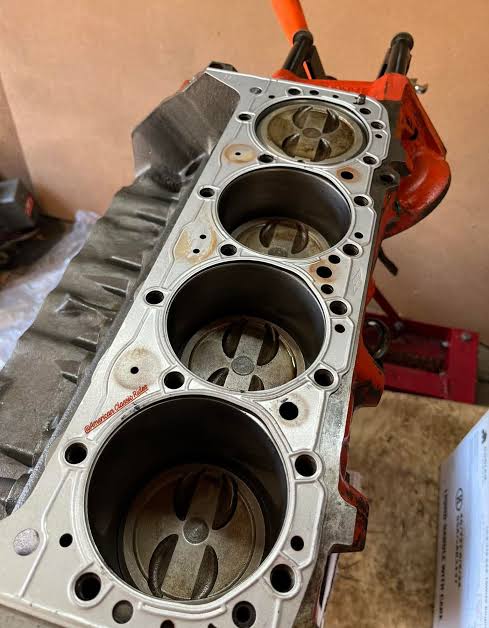
Run an engine hot enough and the head gasket can let go. Then combustion pressure pushes into the coolant, overheats the engine again and blows coolant out the overflow.
So after a serious overheat, we test the system before quoting any cooling repairs. Combustion gas in the coolant points to a head gasket, a cracked head or a leaking EGR cooler. We find which one before quoting, and head gasket and head stud work is done in house. A clean test means you pay only for the cooling repair.
White smoke, coolant in the oil, oil in the coolant or a gauge that pins within minutes means park it. Driving on a failed head gasket can turn a gasket job into major engine damage.
Honest quotes, no extra parts
Word for word from Google.
319 reviews
- Customer
- Colton Peterson
Big fan of bodacious. Very knowledgeable and helpful. Far and away the most honest shop I've dealt with in my adult life. They provide detailed and accurate quotes, charge fair prices, don't sell unnecessary repairs, and will even give you tips on small DIY tasks. Will be bringing the clapped out 6.6 back.5 STARS
What sets the price of a cooling repair
A thermostat and a head gasket can share a symptom, so we price after testing.
| Cost factor | Why it changes the job |
|---|---|
| Which part failed | A cap or thermostat is a small job next to a radiator or water pump. |
| Access on your engine | Some water pumps and coolers come out the front; others are buried. |
| Diesel coolers | EGR and oil coolers sit in different places on different models, and one that caused the overheat gets fixed too. |
| Engine damage | A blown head gasket after an overheat adds head machine work. |
| Shared labor | When other worn parts sit behind the same teardown, replacing them at the same time saves paying for that labor twice. |
Most cooling work is drop-off. Diagnosis typically takes 24 to 72 hours depending on workload. We call with what needs attention now and what can wait, and no work is done without your approval. More on our what to expect page.
Tell us what your truck is doing
Send the year, the engine and what you are seeing, and we'll get back to you as quickly as we can.
- Year, make and engine
- What it is doing, and when it started
- Any codes or recent repairs
Rather talk it through? Call (303) 808-1563
Overheating questions owners ask us
When the needle will not stay put.
No. Every trip into the red risks the head gasket. If the gauge is climbing, pull over, let it idle to keep coolant moving, and shut it off if it keeps rising. Then call us.
A long loaded climb is the hardest test a cooling system goes through. At altitude there is less air across the radiator, so a slipping fan clutch or a partly plugged radiator that keeps up everywhere else falls behind. For that pattern we start by testing the fan clutch and airflow under load.
Only if the radiator is the problem. Plenty of trucks get one and still run hot because the fan clutch, water pump or head gasket was the cause. We test first so you only pay for the part that failed.
Gauge creeping up on the hills? Let us find out why
Call and tell us when it runs hot, or use Request Service to send the details. Or drop us a line right here from the website and we'll get back to you as quickly as we can.