
Diesel Diagnostics That Find the Actual Cause
Our diesel diagnostics start with the problem you came in with and end with the reason it happened, not just the code that popped up. Tell us what the truck is doing and we will track it to the source.
A code is where we start, not where we stop
A trouble code tells you which sensor reading or circuit the computer did not like. It does not tell you which part failed. A low rail pressure code can come from the high-pressure pump, a restricted filter, air in the fuel, a leaking injector or a wiring fault. Swapping the part the code names can cost real money and fix nothing.
A cleared code comes back. The fault that set it is still there, waiting for the next hill or the next cold start.
We read the codes with current OEM factory scan tools, then check what the engine is actually doing: live data like desired versus actual fuel pressure and boost, when the fault set, and the parts and wiring involved.
Then we confirm it. If the data points at the fuel system, we test the fuel system before anyone orders a pump.
What the truck is doing, and what we check
Tap the symptom closest to yours. These are the usual suspects; the test results decide.
Check engine light
The light means a monitored value went out of range. We pull every stored and pending code and check the live data behind it before calling a part bad.
Limp mode and reduced power
Limp mode is the engine computer cutting power to protect the engine or transmission. Common triggers are fuel pressure that cannot keep up, boost that is too high or too low, emissions faults like a loaded DPF, and transmission problems. When an emissions fault is behind it, we find what caused it and fix it through our diesel emissions repair service.
Hard start and no start
A diesel needs fuel pressure, compression and enough heat to light the fuel. We check fuel supply first: lift pump, filters, air in the lines and rail pressure while cranking. Cold-start aids come next, glow plugs on Powerstroke and Duramax engines and the intake grid heater on Cummins. On 7.3 and 6.0 Powerstrokes, low injection control pressure from the high-pressure oil system is a frequent cause.
Misfire, rough idle and smoke
Smoke color narrows it down. Black smoke is more fuel than the air can burn, often a boost leak, a turbo problem or an injector over-fueling. White smoke can be unburned fuel or coolant, and coolant points toward a head gasket or EGR cooler. Blue smoke is oil. We test injector balance and contribution before recommending diesel injector repair.
No boost and low power
Low boost can be the turbo, but it is often a split intercooler boot, a cracked intercooler, sticking VGT vanes, a bad actuator or sensor, or an exhaust restriction downstream. We smoke-test the intake side and check turbo command against actual boost before anything comes off the truck. If the turbo is the problem, we repair or replace it through our diesel turbo repair service and fix what took it out.
Noises, drivability and intermittent faults
Surging, knocks, whistles and the fault that disappears the minute the truck reaches a shop. Intermittent problems are the hardest work we do, because the fault has to show up before it can be found. We ask when it happens, then test under those conditions: hot, loaded or on a grade.
The problems other shops could not find
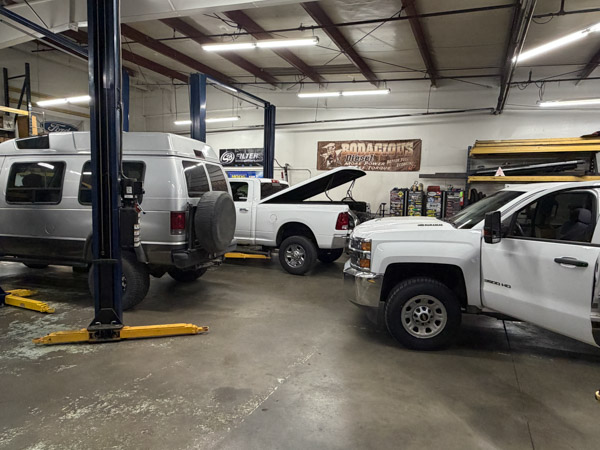
A lot of the trucks in our bays have already been somewhere else. Owners drive in from the mountains and across the Front Range for this work.
- Tell us every part already replaced and every code already cleared
- We test the parts other shops replaced instead of assuming they are good
- A failed high-pressure pump can send metal through the fuel system, so we check past the pump before diesel fuel system repair
"I was under time pressure to get some work done on my truck prior to leaving for a trip. They did a fine job getting the work done (and reworking a bunch of problems that another shop didn’t solve or created) and the truck ran very well pulling my boat to Tennessee. I will continue using them because they give me confidence the truck will run right."Woody Boyd, Google review
From drop-off to a plan you approve
Most diagnosis is drop-off. Typical diagnostic turnaround is 24 to 72 hours depending on the current workload of the shop, and we call you with what we find.
Confirm the complaint
We start with the problem you described and verify it: codes, live data and, when needed, a drive under the conditions where it happens.
Look at the rest of the truck
While it is here, we evaluate the rest of the truck. Leaks, wear and related faults get noted.
Now, wait or combine
You hear what needs attention now, what can wait, and where doing two jobs on the same teardown saves labor.
You approve, we repair
No work is done without your approval. You decide what gets fixed and when.
Each engine fails in its own way
The same symptom means different things on a Ford, a Duramax and a Cummins.
Powerstroke
The 7.3 and 6.0 fire their injectors with high-pressure oil, so oil pressure faults show up as fuel problems. The 6.4 and 6.7 are common rail, and the 6.7 has run a Bosch CP4.2 pump since 2011.
Ford Powerstroke repairDuramax
Every Duramax is common rail, so rail pressure data tells us a lot. The LB7 is known for injector trouble, and the LML runs a CP4.2 that can contaminate the whole fuel system when it fails.
Chevy and GMC Duramax repairCummins
The 5.9 went from the mechanical P7100 on the 12-valve to the electronic VP44 on the 24-valve, then to common rail with a CP3. A weak lift pump is a common reason a VP44 struggles, so we check fuel supply before blaming the injection pump.
Ram Cummins repairTell us what your truck is doing
Send the year, the engine and what you are seeing, and we'll get back to you as quickly as we can.
- Year, make and engine
- What it is doing, and when it started
- Any codes or recent repairs
Rather talk it through? Call (303) 808-1563
What drives the cost of a diagnosis
Diagnostic time depends on the truck. These are the things that make one job quick and another long.
- Whether the fault is present right now or comes and goes
- How many systems are involved, such as fuel, air, emissions and transmission at once
- Work already done elsewhere that has to be checked rather than trusted
- Access: some tests mean removing parts to reach the component or take a reading
Diesel diagnostics questions owners ask
Straight answers before you bring the truck in.
Typical diesel diagnostics take 24 to 72 hours, depending on workload. Most diagnosis is drop-off at our Golden shop. A fault that only shows up hot, loaded or on a grade can take longer, because we have to recreate those conditions to catch it.
A code reader tells you which reading was out of range, not which part failed. Diesel diagnostics means testing the system behind the code with factory scan tools and live data.
Yes. The parts list and the codes that were cleared tell us what has already been ruled in or out, and they often point straight at the real problem. A replaced part still gets tested, because new parts can fail or be the wrong fix.
No. No work is done without your approval. We call with what we found, what needs attention now, what can wait and where combining repairs saves labor.
Yes. A plugged DPF or a failed EGR or DEF part is usually the result of something upstream, like an injector, a boost leak or a bad sensor, so we find that before replacing emissions parts. We do not do delete work.
Check engine light on? Tell us what your truck is doing
Call the shop or send a service request with the symptoms, the codes and anything already replaced. Or drop us a line right here from the website and we'll get back to you as quickly as we can.