


4x4 Transfer Case Repair for When Four-Wheel Drive Quits
Our 4x4 transfer case repair work covers the whole path power takes to the front wheels, from the dash switch to the hubs. We find which link broke, fix it, and prove it in every range.
Five parts have to agree before the front wheels pull
In 2WD the transfer case drives only the rear axle. Ask for 4H and the case locks in the front output, the front driveshaft turns, and the axle and hubs connect the wheels. 4L adds gear reduction for crawling and heavy pulls.
If one step fails, the dash light can come on while nothing happens up front. The fault can be a switch, a connection, a vacuum line or an internal failure in the case.
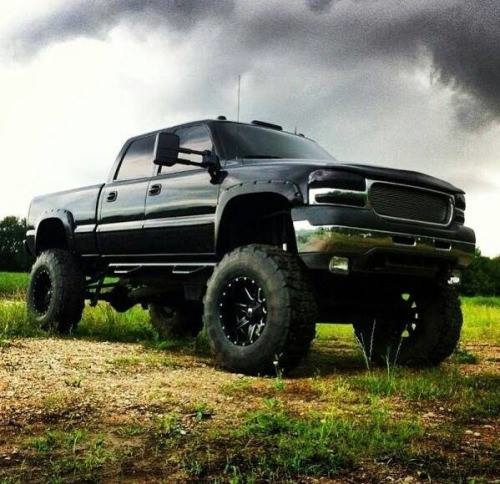
A lift steepens driveshaft angles and changes alignment specs, which brings vibration and early U-joint wear. Our lift kit installation accounts for those angles from the start.
What the truck does, and where we look first
When the noise happens matters as much as what you hear.
| What you notice | What it often points to | What we check first |
|---|---|---|
| 4WD light flashes or never comes on | Shift motor, encoder, selector switch or a wiring fault | Codes, switch input and shift motor command on the scan tool |
| Light comes on but the front never pulls | Axle disconnect, hub or vacuum fault, or a broken front shaft | Whether the front driveshaft turns and the hubs lock |
| Grinding or ratcheting when you shift into 4WD | Shifting at the wrong speed, a worn shift fork or a failing hub | Shift procedure, fork and hub engagement |
| Pops out of 4WD under load | Worn shift fork, range sleeve or detent, or worn gear teeth | Fluid condition and what is on the drain plug magnet |
| Clunk shifting into drive or reverse | U-joint play, a dry slip yoke, differential backlash, play in the transfer case, a bad motor or transmission mount, a loose hub or bearing, or a driveline support bearing | Every U-joint, the yoke splines and gear lash |
Where four-wheel drive breaks, piece by piece
Each one fails its own way.
The gearbox behind the transmission
Most pickup transfer cases use a chain to drive the front output. Over years of pulling it stretches, slaps the case and can wear through the housing. Low or wrong fluid speeds that up.
- Fluid level, type and condition
- Metal on the drain plug magnet
- Chain slack and housing wear
- Input and output seal leaks
Where the front wheels get connected
Some trucks lock the front wheels in at the hubs. Others use an axle actuator, or vacuum-controlled hubs, which is how Fords apply the front hubs. A cracked vacuum line or stuck actuator leaves the case in 4WD with nothing pulling up front.
- Hub engagement on both sides
- Actuator and vacuum supply
- Axle seals and differential fluid
- Ball joints and front end wear, shared with our truck suspension repair work
The parts that carry the twist
U-joints wear gradually, along with the transfer case, and give warning before they fail. First comes a clunk into gear or a vibration that builds with speed. A joint that lets go at speed can take the driveshaft with it.
- Play in every U-joint
- Slip yoke splines and lube
- Carrier bearing condition
- Driveshaft and pinion angles
The electronics that make it shift
Plenty of trucks on the road still use a manual shift lever. On electronic-shift trucks, a dash knob tells a module to run a shift motor on the transfer case, and a position sensor reports where the case ended up. When the motor sticks or the sensor reads wrong, you get a flashing light and a truck stuck in one range.
- Stored codes in the 4WD module
- Switch signal and module command
- Shift motor movement and position feedback
- Connectors and wiring near the case
Four steps before anything gets replaced
Driveline noises travel through the frame, so we confirm the source first.
Hear it and feel it
We drive it in 2WD, 4H and 4L, and in turns, to reproduce the complaint.
Scan the 4WD system
OEM factory scan tools read the 4WD module, command the shift motor and show sensor feedback, the same approach as our diesel diagnostics.
Inspect from underneath
Fluid condition and level, U-joints and play, seals, hubs and driveshaft angles. Fluid is not drained during an inspection unless a transfer case service has already been agreed on.
Repair and run every range
Fix what failed, refill with the correct fluid, then road test 2WD, 4H and 4L.

Engage 4WD for a few miles every month, even in summer, and keep all four tires the same size and tread depth; mismatched tires make the axles turn at different speeds and strain the case.
4WD sits all summer, then gets called on in a snowstorm
- Actuators, shift motors and hubs that sit for months tend to stick at the first storm
- Cold, thick fluid slows engagement on frozen mornings
- Deicer and slush attack seals, wiring and vacuum lines
- When the Traction Law is active on I-70, a 4x4 that will not engage counts as two-wheel drive and needs M+S or winter tires, or chains, to comply
How the big three put power to the front
The front ends differ, and that changes what wears.
Ford Super Duty
A solid front axle with vacuum-operated locking hubs. For engine problems, see our Powerstroke repair page.
Chevy and GMC HD
Independent front suspension with CV axles, engaged by a front axle actuator. Engine questions go to our Duramax repair page.
Ram Heavy Duty
A solid front axle with no locking hubs, just a front axle disconnect that connects and disconnects the axle. For engine problems, see our Cummins repair page.
Same testing on Ford, Chevrolet, GMC and Ram gas pickups and on larger Ford, Chevrolet and GMC SUVs.
Repairs that keep a towing company rolling
Word for word from Google.
319 reviews
- Customer
- Brian Rothlisberger
- Business
- Bear Creek Towing LLC
Best place in the Denver metro area for Diesel Truck Repairs. Five Stars everytime! Recently had a bunch of work done and I'm very satisfied with the results. Warranty work is also top notch! Thanks Jeremiah, Mel and the rest of the crew. Appreciate all you do. Brian Rothlisberger, Bear Creek Towing LLC.5 STARS
What sets the cost of a 4x4 repair
A sticky actuator and a worn-out transfer case can feel alike, so we quote after we test.
| Cost factor | Why it changes the job |
|---|---|
| Where the fault is | A switch, vacuum line or actuator is a small job next to opening a transfer case. |
| Repair or replace the case | Seals and a chain cost less than a case with a worn-through housing or broken gears. |
| How long it was driven that way | A slapping chain or a loose U-joint can take other parts with it. |
| Rust and seized hardware | Years of winter roads can turn a simple removal into a longer one. |
| Shared labor | With a driveshaft already out, U-joints or seals can be done for little additional labor. |
Most 4x4 work is drop-off, and diagnosis typically takes 24 to 72 hours depending on workload. You get a call that separates what has to be fixed now from what can wait, and nothing is touched without your approval. More on our what to expect page. Transmission slipping too? Tell us when you call and our diesel transmission repair team can check it while the truck is here.
Tell us what your 4x4 and Transfer Case is doing
Send the year, the engine and what you are seeing, and we'll get back to you as quickly as we can.
- Year, make and engine
- What it is doing, and when it started
- Any codes or recent repairs
Rather talk it through? Call (303) 808-1563
4x4 and transfer case questions
When the 4WD light will not cooperate.
If the light flashes after you asked for 4WD and the truck did not engage, the problem is in the transfer case or what controls it: the shift motor, its sensor, the switch, the wiring, or a hub that did not connect. We scan the truck and command the motor to find which.
No. We can't recommend driving a truck with a problem we haven't seen. A slapping chain can wear through the housing and turn a chain job into a replacement. If there is a light on, an odd noise or a vibration, have it looked at first.
If the case is damaged, it needs a new one. Otherwise it can usually be rebuilt. We quote after testing.
Use it. Engage 4WD for a few miles monthly so actuators keep moving, keep the fluid at the right level in the case and front differential, and run matched tires. If anything feels off in the fall, bring it in before the first storm.
4WD light blinking or a clunk from underneath? Let us trace it
Call and tell us what it does when you shift into 4WD, or use Request Service to send the details. Or drop us a line right here from the website and we'll get back to you as quickly as we can.